Showing posts with label training. Show all posts

Sunday, August 17, 2014

GPS Not Just For Your Car Anymore!

Technology is advancing at a rapid pace these days and there are applications available for almost everything. Global Positioning Systems (GPS) are now considered standard equipment in cars and vehicles to help you get where you are going.

Recently, SIRC has discovered that more and more journals in the SIRC Collection are including articles on ways to use a GPS to help you in your sport and fitness training. From running, skiing, cycling, and walking to rowing, soccer and tennis, a GPS can provide a multitude of information to coaches and athletes to improve their training.

A GPS can help you:

  • track speed and distance
  • track an athlete in team sport
  • simulate a race course
  • even monitor heart rate when connected to other applications

These are only a few of the ways a GPS and technology in general can help you in your training. There are more innovative ways to use technology to push the envelope and achieve your next personal best.

Check out the following resources to help jump start your GPS training :

Be sure to visit SIRC for even more great resources on GPS and training.

Friday, August 15, 2014

Drink up!

We all know how important it is to remain hydrated during sport and exercise so as to maintain our performance level. Your body needs to replace fluids, sodium, potassium, chloride and other elements lost during exertion. And while it is important to consume liquids there may be a couple of little known facts that you might be interested to add to your knowledge bank.
  • Did you know that emerging data shows that simply washing the mouth with water or sports drink can effectively delay fatigue? So while consuming the necessary fluids is important, rinsing your mouth can be beneficial as well. (article 3)

  • The same article suggests that people who drank fluids from freely flowing sources such as a cup or open mouth bottle consume more than those who drink from a straw? Something to think about next time you use that squeeze bottle, perhaps taking the nozzle out might be more beneficial. (article 3)

  • You may not feel like your sweating as much during cold weather workouts, but you are still losing fluids while exercising in the winter. You may not need the same amount of electrolyte replacement as during the summer, but it is important to keep up fluid levels as cold-weather dehydration can increase the risk of hypothermia. (article 4)

So whether you are a recreational or high performance athlete, and it’s summer or winter it is important to check and maintain a good fluid balance to stay at your best performance level. Checkout these and other hydration-related resources at the SIRC library:

  1. Hydration science-From Hype to Hyponatremia Scan’s Pulse, Summer 2009, 28(3) p.17
  2. Gregory Seale. Water and the Energy Drink. SPED: Sport and Physical Education. May 2009, 6(1) p.8-9.
  3. Kirkendall, Donald. Hydration: It’s Just the First Step. Soccer Journal, September-October 2009, 54(5) p. 20.
  4. Carmichael, Chris. Drinking Problem. Outside. December 2006, 31(12) p. 80.

Tuesday, August 5, 2014

Pan/Parapan American Games’ "Think Tank"

On Saturday April 24th SIRC’s Regional office Information Specialist participated in the Pan/Parapan American Games’ “Think Tank” put on by the Sport Alliance of Ontario (SAO). This event was arranged to give the Provincial Sport Organizations (PSOs) an opportunity to come together as a group and identify the top five legacies they would want to see come out of the 2015 Games, which Toronto and the Golden Horseshoe will be hosting.

After opening remarks by Holly Abraham, Chair of the SAO Board of Directors, and a brief background presentation by Blair McIntosh, SAO’s Director of Games, facilitator Marg Strus broke the participants into five groups. Those groups then had 90 minutes to brainstorm to come up with their top five legacies overall.

When the groups came back to share their results there were some definite common themes in the responses. Infrastructure was one theme that was important to all. It included not only facilities, but transportation as well. PSOs want permanent, multisport facilities that will continue to be maintained and used post games.

Training was also a common theme. Training not only for coaches and athletes, but for volunteers, and games administration as well, so the Pan/Parapan American Games can be the best games they can be. Having Ontario host smaller international sporting events prior to 2015 was suggested as a perfect way to facilitate this.

Other common themes included Communication, Partnerships, Community Development and Multiculturalism. SAO took away each group’s final five as well as all their brainstorming notes and will be compiling the results to present to Ian Troop, CEO of the Pan/Parapan American Games, before the next scheduled session on May 29th, 2010.

Below are some SIRC resources which may be useful to game organizers.
“Everyone rolls up their sleeves and mucks in”: Exploring volunteers’ motivation and experiences of the motivational climate of a sporting event. Allen, Justine B.; Shaw, Sally, Sport Management Review (Elsevier Science ) May2009, Vol. 12 Issue 2, p79

A Study of Human Resource Management Practices in Sport Events Management Organization in China. Lei Li, Journal of Beijing Sport University 2009, Vol. 32 Issue 5, p8

Consumer Satisfaction with an Action Sports Event. Yosuke Tsuji; Bennett, Gregg; James Zhang, Sport Marketing Quarterly 2007, Vol. 16 Issue 4, p199

Cultural Orientations of Sport Managers. Girginov, Vassil; Papadimitriou, Dimitra; López De D'Amico, Rosa, European Sport Management Quarterly Mar2006, Vol. 6 Issue 1, p35

Organizational Image and Identity Management in Large-Scale Sporting Events. Parent, Milena M.; Foreman, Peter O., Journal of Sport Management Jan2007, Vol. 21 Issue 1, p15

Thursday, July 31, 2014

Sleep Impacts Sport Performance

Participating in sport requires us to be at our best both physically and mentally. For optimal physical performance our brain and central nervous system (CNS) play a key role in biomechanics, muscle activation, reaction and reflex movement, and other physiological functions. In order to work at its best, the brain and CNS need to be well rested. Research has proven that sleep is a clear predictor of performance in skill based sport (Underwood (2010), order article from SIRC.

Our bodies need sleep to help recover from physical and mental stress accumulated during the day. Missing too much sleep has been shown to reduce cardiovascular function by 11% and impact brain function nearly twice as quickly. If an athlete is forgetting information given in a practice or isn’t making effective decisions during sport, chances are they aren’t getting enough sleep. Sleep also affects glucose metabolism which is the main energy source for athletes.

Tips that can help athletes get enough rest without impacting training:
  • Include sleep in your training log
  • Perform active recovery
  • Include massage in your training
  • Get adequate sleep
  • Balance nutrition with training load
  • Eat before exercise
  • Eat for recovery

For more information on sleep and its physiological and psychological impacts please contact SIRC.

Reference: Underwood, John (2010). Sleep: Now Clearly a Predictor of Performance. Coaches PLAN du Coach, 17 (1), 31-34.

Monday, July 28, 2014

Master Athletes

Check out the latest SIRC Newsletter on Master Athletes!

A Master Athlete is anyone over the age of 35 and competitive. As baby boomers age the number of athletes competing later in life will be on the rise. Age group events become the new challenge as there is the chance every few years to be at the top of your game and still blow away most of the competition like running a sub-3hr marathon at age 70. Master Athletes are awe-inspiring but have different needs that should be recognized. If you are not ready to hang in your competitive hat check out how to tweak your program to stay at the top of your game well into the golden years!

Saturday, July 26, 2014

Pregnancy and Exercise is Highlighted this Month

Paula Radcliffe and Kara Goucher are to Olympic Distance runners who happen are due on the same day this September. This has caused a flurry of articles being written on pregnancy and exercise in popular publications this month as they share their tips on physical fitness letting readers catch a glimpse of how they train during their pregnancies. The result?
- They ease up on training, shortening runs and cross training.- They indulge in cravings once in a while.- They incorporate new forms of fitness like anti-gravity treadmills to reduce pressure on their bellies.If you are looking for more information on pregnancy and exercise? Check out the SIRC Newsletter and Runner’s World site on the topic.

Also, the following articled have recently been published on the topic. They are available from the SIRC Collection.

R, B. (2010). Does exercise training during pregnancy influence fetal cardiovascular responses to an exercise stimulus? Insights from a randomised, controlled trial. British Journal of Sports Medicine, 44(10), 762-764.

Jones, J., Housman, J., & McAleese, W. (2010). EXERCISE, NUTRITION, AND WEIGHT MANAGEMENT DURING PREGNANCY. American Journal of Health Studies, 25(3), 120-128.

Melzer, K., Schutz, Y., Boulvain, M., & Kayser, B. (2010). Physical Activity and Pregnancy: Cardiovascular Adaptations, Recommendations and Pregnancy Outcomes. Sports Medicine, 40(6), 493-507.

Looks or Training Volume? Which is more important for ultra runners?

What matters more to performance in ultrarunners? Training or anthropometric parameters? The results from this research were published recently, combined with interesting facts on running performance such as:

  • Skin-fold thickness is positively associated with performances over 1,500m -10,000m and marathons
  • Length of upper leg is a positive associations with running times over 800,1500 and 5000m
  • Circumferences of chest and thigh are positively associated with running times over 800m
  • Upper arm circumference is positively associated with 10,000m running times and ultrarunners

Characteristics of Ultrarunners

  • Lower BMI
  • Lower amounts of fat at abdomen and legs

At the end of the day, the results of the study indicate that training volume and personal best time in marathon have a greater impact on performance when you are going the distance.

Want to read the full article? Contact us at askalibrarian@sirc.ca

Knechtle, B., Wirth, A., Knechtle, P., and Rosemann, T. (2010) Training Volume and Personal Best Time in Marathon, Not Anthropometric Parameters, are Associated with Performance in Male 100-km Ultrarunners. The Journal of Strength and Conditioning Research. 24(3), 604-609.

Wednesday, July 9, 2014

Spring Training

Spring is always that time of year of hope and excitement, and all the joys of summer sport come flooding back. As we look forward to the days of trail or road running, golf, tennis, biking, and team sports like soccer, football, baseball and lacrosse, we need to be careful and remember that getting back into these activities will start working those muscles that may have become dormant with our winter training routines. Preparing our muscles for these movements will help us slide right back into our summer sports safely while increasing enjoyment. Here are two concepts to think about when creating your spring training schedule: Strength training and Yoga for sport.

Strength Training:
  • While being accepted as a part of a well-planned workout schedule, it is important that we plan for training that is transferable to our sports. Traditional weightlifting develops stronger muscle, however plan to exercise your stabilizing muscles that help in joint movement, balance, and provide the body with needed leverage.
  • You want to train movement, not just your muscles. Sport creates a need for the body to use force coming from several different muscles and joints. You want to plan exercises that use multi-joint movements that feed to your sport demands.
  • Multi-directional movement will help the body to build the stability for sport that creates force in varied angles and motions. When we think about trail running, as in any sport, we realize that not all motion is equal. Developing strength in a range of motion will help to compensate for the unknowns that are thrown at us in sport.
Yoga for Sport:
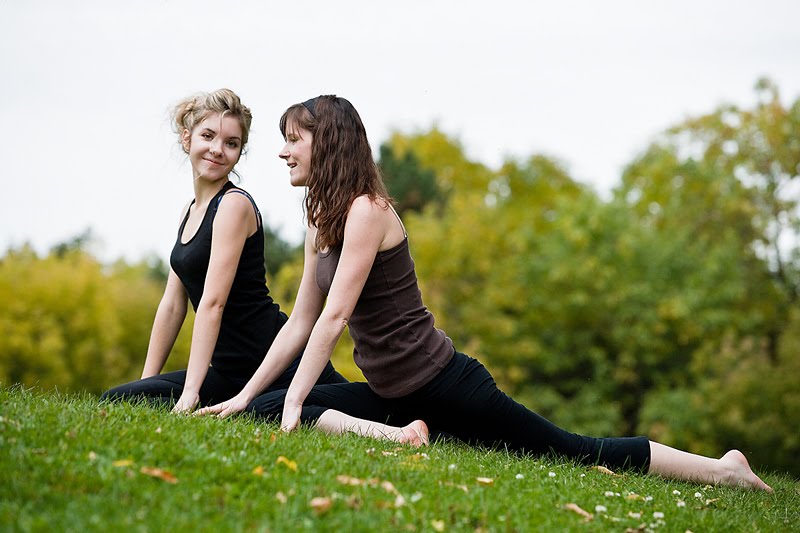
  • What we first think of when it comes to yoga is developing flexibility. However, after a few studies, flexibility is not the only benefit. Other benefits include increased stride length, decrease in muscle discomfort, improved unconscious perception of movement and spatial orientation, stronger core, and mental benefits. Adding yoga to spring training will help decrease your chance of injury as we move winter sport into summer sport.

Reference from the SIRC collection:
Twist, Peter. (2008). Training Transition for Spring Sports and Recreation. Fitness Informer, Spring/Summer 2008, 18-19.

Tuesday, July 1, 2014

The Erg. Friend or Foe?

Ask any rower what they think of the ergometer. Friend or foe? The “erg” is a rowing machine that allows an athlete to simulate the very demanding rowing motion on the water. Like the treadmill, imagine putting in that much physically demanding exertion on an indoor rower and going absolutely nowhere! But what a full body work out! So efficient is this machine, erg testing is often used as part of fitness selection criteria for many national teams, including Team Canada, which is currently competing at the 2011 World Rowing Championships in Bled, Slovenia.


Today’s ergs have flywheels and digital readouts, allowing the rowers to measure strokes per minute, power output and distance covered, which are all significant components to analyzing performance and staying motivated. It’s no secret, elite rowers are amongst the most physically fit athletes in the world, as the sport demands all that the human body can physically and mentally deliver at once. And when a rower can’t be on the water, they use the erg as a training alternative. And since rowing is an incredibly effective whole body exercise, recreational fitness buffs can also benefit from the erg in various ways, and depending on their program, can have the following gains to their physical conditioning:
  • Aerobic and anaerobic fitness
  • Intense calorie burning
  • Muscle strength
  • Muscle endurance
  • Resistance training
  • Flexibility
  • Low impact
  • Coordination / Skill
The erg doesn’t lie, which is probably why it is one of the most feared pieces of equipment in the fitness world. No matter what your relationship is with the erg, nemesis or not, it in fact allows the body to train efficiently, stay focused, and develop great power and fitness all at the same time.


Contact SIRC for more information on ergometer training!

Friday, June 20, 2014

Overtraining

Overtraining occurs when athletes go beyond their training regiments and do not allow enough time for the body to recover. This can damage muscles, tendons, and ligaments and even have a mental effect on the athlete. There are also cases when athletes become ill right before their major event due to overtraining. This is often caused by athletes who are already at their capacity training too hard in an effort to feel as though they’ve achieved their full training potential and thus depleting their reserves and compromising their immune systems.

One general principle known to all elite athletes and coaches training for major events is overload training. Athletes train for long hours and at high intensities. Overload is usually followed by a taper for recovery. However, when an athlete uses all they’ve got but still try to give more without the proper taper, the athlete will have depleted all their resources and become fatigued. If overload has gone wrong, this depletion does not help performance and may actually cause it to drop. Overtraining has occurred.

Overreaching is often a term heard in the context of overtraining. Overreaching is seen as short-term overtraining and refers to training that involves a brief period of overload, with inadequate recovery, that exceeds the athlete’s adaptive capacity. It is often debated whether overreaching is a normal part of training, however, monitoring this kind of training in order for the positive results to come out as opposed to the potential damaging results of burnout becomes the key factor.

Beyond the physical impacts of overtraining such as illness and injury, some of the risks of overtraining include guilt about not working hard enough, disruption of sleep, anxiety/stress, feelings of fatigue, burnout and maladaptive responses to poor performance.The problem here is discerning whether these are short-term effects of intense training or long-term effects of overtraining.

Athletes who are susceptible to overtraining can show the following characteristics, behaviours and attitudes
  • Extreme perfectionist, extremely strong athletic identity
  • Lack of knowledge or awareness regarding the importance of recovery
  • Unrealistic expectations
The best way to prevent overtraining is to get rid of the notion that more is always better. Once an athlete has completed his training exercise the most simple and recommended part of the cycle is rest.

Source from the SIRC Collection:
Richardson, Sean O., Andersen, Mark B., and Morris, Tony. Overtraining Athletes: Personal Journeys in Sport. Champaign, Ill.: Human Kinetics Publishers; c2008.

Wednesday, June 18, 2014

Weight gain ... the healthy way!

Contrary to popular belief there is a time and a place for weight gain. Many athletes are required to gain weight to increase strength, increase their size or increase their musculature. In sports with weight categories, being a heavier weight may not always mean being "fatter" but having a fit heavier body mass. The focus of a recent article in the SIRC Collection addresses athletic weight gain emphasizing a nutritionally balanced plan.

The article acknowledges that gain weight for athletes can be a challenge as weight gain comes from consuming more calories than are burned through activity. However, it is stressed that meeting this challenge can be done by increasing the energy intake by focusing on a variety of healthy foods.

Here are some of the author's suggestions to increase calorie intake for "healthy" weight gain:
  • Plan ahead. Eat at least three meals daily with snacks in between. Planning ahead will help you keep track of total calories of consumption in relation to the energy burned in training/competition
  • Carry energy-dense snacks (trail mix, granola, nuts, low-fat cheese, peanut butter sandwiches)
  • Drink fluids with calories (100% fruit/vegetable juice, 2% milk or chocolate milk). Try a smoothie or milkshake.
  • Try more starchy vegetables (corn, potatoes, peas) which contain more calories. 
  • Add nuts, raisins, dates and other fruits to cereal and yogurts.
  • Include protein (lean meats, poultry, eggs, low fat milk, cheese, peanut butter and beans) to every meal
  • Eat snacks after workouts (fruit, fruit juice, low-fat milk, cereal, peanut butter on toast, bagels or crackers) to replace calories burned in training
  • Increase muscle by including strength training sessions in your training
  • Get plenty of sleep. Rest helps build muscle.
  • Be careful of supplements advertising weight gain and/or increase muscle size, to avoid risk of doping infractions, unsafe ingredients and questionable effectiveness. Most of the same benefits can be found through food options.
The key to remember is that weight gain should be pursued through a balance of healthy food choices, training and recovery. Having a well researched plan in place will be give you the best edge.

Resource from the SIRC Collection:
Woolf, K. (2012). Weight Gain Tips. Splash, 20(2), 12.

Other online resources:
Weight Gain Tips for Athletes
Gaining Weight for Athletes: Nutrition Plan to Put Weight On
Weight Gain in Junior Athletes

Tuesday, June 17, 2014

Body Type and Training Athletes

How can body shape affect an athlete’s reaction to training and recovery?

We know that every athlete is different. However, when it comes to body types, these differences in shape may determine how your body adapts to high intensity training. Some will argue that it is all common sense, when you carry some extra weight your performance is impacted. However, sometimes having a little extra weight can benefit swimmers and bikers on a flat surface while at the same time being far from beneficial for runners.

A more muscled athlete, known as a mesomorph, is generally not as good as a skinnier (ectomorph) athlete at tolerating high level of speed and lactate tolerance training. It means that the more muscle you have on your body the longer you may need to take recover from the high end efforts. Coaches and athletes will need to be mindful of this when building and designing the training plan.

Body type also plays a role in gender adaptations. Different hormone make ups related to body shape also affect training and recovery. Males for the most part cannot tolerate high intensity training as well as women. This is due to their higher levels of testosterone. Training hard impacts testosterone levels and therefore tends to cause more damage for those with higher level of testosterone. This doesn’t mean that men can’t train as hard as women, again it just means that they need to factor in more recovery time.

Don’t think that women are getting off easy on this. Though female athletes recover faster from hard training since the impact is not as severe on their hormonal balances, the science of body types also has an impact on female tolerance of high intensity training. Females with an endomorph body type (soft and round and gains fat easily) will tolerate higher volume of hard training than females with a leaner mesomorph build (muscled athletes). So they too will have to factor this into recovery time.

In general, athletes and coaches need to know that body type matters in training and recovery. If you are male, or have a more muscular build your body’s systems will be impacted more heavily by high intensity or high volume training. By watching diet and factoring in extra recovery time, athletes will be better equipped to adapt to these types of training sessions.

Resource from the SIRC Collection: 
Manietta K. Shape Matters. Australian Triathlete. February 2012;19(4):34-36.

Contact SIRC for more information on training and recovery for athletes!

Monday, June 16, 2014

Recovery

SIRC Newsletter now available online:  Recovery

You’ve had an intensive workout and your muscles are sore, you’re thirsty and your body is yelling at you to just lie down and rest. This is the easy part! Often neglected but very important, recovery is a major part of training and should not be overlooked. The idea is to make time for your body to get the necessary rest it needs to perform even better the next time you train. Muscles need to rebuild and your body needs to replace its essential nutrients.

Read More: http://www.sirc.ca/newsletters/mid-may12/index.html

The Tech Savvy Coach

Many coaches have already started to incorporate smart technology into their training, and when used to its full potential, iPads or other smart technologies can significantly enhance the coaching business. To some coaches, technology can seem a little daunting, but coaches need to embrace it by making themselves aware of what is available and how it can benefit them and their athletes.

Slow Motion Video/Video Streaming

There are many benefits of having a video readily available when it comes to sport coaching.
  • Athletes and coaches do not need to be in the same location to have a relationship 
  • A coach can provide support from any location during competition 
  • Game strategies, injury concerns and nutritional needs can all be discussed 
  • A coach can quickly record their athlete in action and have it played back in slow motion which enables both parties to see what’s happening and enable the coach to point out corrections 
  • Enhances fan interaction 
Web Applications

Everyday more and more applications are being created to help us navigate and interact with the world. Mobile applications for coaching are no exception and there are many you can access effortlessly and with minimal cost.
  • Coaches Eye - Web app for the iPhone has many features including: video, slow motion review, audio commenting and video drawing to highlight problems
  • Sports Game Timer App – Many recreational leagues require equal playing time or that each player plays at least half of the game. Keep track of players with a simple timer/tracker for sports teams. Great if you need proof for the parents! 
  • G.A.P.S. Sports Coaching App - Gain access to over 1750 activities, practices and skills, perfect for creating enjoyable and interesting coaching sessions and PE lessons on the move.
The use of technology allows coaches to organize themselves and gain efficiency by having simple to operate equipment that produces maximum results. Up until this point, coaches might have been able to get away with older methods of running a program, but not anymore. Today’s technology can make you a better instructor, manager and leader and coaches need to grab a hold or be left behind. Replace the old way of thinking and you’ll be amazed at what technology can offer!

References from the SIRC Collection

1. A Bertram C, Marteniuk R, Guadagnoli M. On the Use and Misuse of Video Analysis. International Journal Of Sports Science & Coaching [serial online]. June 2, 2007;2(0):37-46.
2. Lachance A. Long distance coaching using today's technology. Coaches Plan/Plan Du Coach [serial online]. Summer2009 2009;16(2):56-57.
3. O'Donoghue P. The use of feedback videos in sport. International Journal Of Performance Analysis In Sport [serial online]. November 2006;6(2):1-14 The techno coaching revolution. Cycling Weekly [serial online]. July 14, 2011;:70-72.

Sunday, June 15, 2014

Warm up to Train at Your Peak

Everyone is aware of the importance of warming up to improve performance and prevent injury. There is good reason for this practice, because scientists have shown that warm muscles are flexible, resistant to tearing and can produce force more quickly.

One of the major problems facing today’s athletes is muscular injury, both recreational and professional. A well-formed warm up will prepare the athlete mentally and physically for the intense movement associated with training or competition.

Some benefits of a good warm up include:
  • Increased muscle temperature 
  • Increased body temperature and blood flow 
  • Reduction of muscle soreness and joint stiffness 
  • Improves range of motion (ROM) 
  • Promotes body relaxation and reduces emotional stress 
Some athletes advocate an efficient warm up while others believe it only tires you out and affects overall performance. Warm ups can tire you out if done improperly, try not to overdo it; a moderate 10 minute warm up is ideal and anything beyond that tends to be counter-productive.

Some excellent warm up exercises are the tried and true:
  • Jumping Jacks
  • Skipping
  • Walking Quad Stretch
  • Squats
A proper warm up can provide you with the needed flexibility to perform consistently from the beginning to the end of your competition and can reduce the chances of injury.  Remember to incorporate a few minutes to warm up at the start of your routine because this simple addition can make you a winner!

References from the SIRC Collection

1, ACL INJURY PREVENTION IN THE FEMALE ATHLETE: 3-STEP WARM-UP PROGRAM. Performance Conditioning Soccer [serial online]. February 2012;17(1):12-13.
2. A WARM WARM-UP. Journal Of Pure Power [serial online]. April 2007;2(2):11-13. 
3. Jee Won S. Do You Stretch Right?. Soccer Journal[serial online]. March 2011;56(2):62.
4. Swanson J. A Functional Approach to Warm-up and Flexibility. Strength & Conditioning Journal (Allen Press) [serial online].
5. Woods K, Bishop P, Jones E. Warm-Up and Stretching in the Prevention of Muscular Injury. Sports Medicine [serial online]. September 2007;37(12):1089-1099.

Wednesday, June 11, 2014

Go Canada Go!

SIRC Newsletter now available online: Go Canada Go!

This summer, approximately 10,000 athletes will compete in 302 events at the Summer Olympics in London. No other sporting event is as big or as dramatic. Dreams come true, friends and memories are made, the Olympics captivates us like nothing else.

Read More: http://www.sirc.ca/newsletters/mid-July12/index.html

Altitude Training

Training at high altitude has long been used by Olympians as a means of improving their potential.  We all know that athletes always seek to get a competitive edge but what does altitude training really do for an athlete?

Benefits of Altitude Training

For any type of exercise that lasts longer than a few minutes the body needs to use oxygen to the produce energy required for the specific exercise; without oxygen your muscles seize up and have the potential to be damaged.  The theory behind altitude training is that it increases the number of red blood cells in the body which in turn improves the oxygen flow to the muscles, so upon a return to sea level, the increased oxygen could be used to enhance performance.
  • Elevated breathing that athletes experience when they return to sea level can account for 10-20% of the body's increase in its ability to consume oxygen
  • Oxygen increase can last up to seven days in low altitude
Potential Problems

Acclimatization to a high altitude is not simple and some of these effects could potentially cancel out any possible benefits:
  • Weight loss 
  • Possibility of immune system being compromised resulting in sickness
  • Intense exercise is not possible because of the lack of oxygen
  • Some people just do not adapt as well as others
  • Accessibility may be too much of a hassle or unrealistic for some athletes
Studies on altitude training have been ambiguous so far and have many debating the pros and cons.  There is not one workout program that is appropriate for everyone, just like at sea level.  In the end it's ultimately up to the athlete and coach to research and decide if it's worthwhile.

References from the SIRC Collection:

1. BLISS D. THE HEIGHTS OF SUCCESS. Athletics Weekly (Descartes Publishing Ltd.). June 2, 2011;66(22):28-30.
2. Hahn A, Gore C. The effect of altitude on cycling performance: a challenge to traditional concepts. / Effet de l'altitude sur la performance cycliste: un defi pour les concepts trraditionnels. Sports Medicine. 2001;31(7):533-557.
3. LOFTUS-HILLS T. THE HIGHS AND LOWS OF ALTITUDE TRAINING!. Australian Triathlete. March 2010;17(5):50-52.
4. Nummela A, Rusko H. Acclimatization to altitude and normoxic training improve 400-m running performance at sea level. / L ' acclimatation a l ' altitude et l ' entrainement "normoxique" ameliorent les performances sur 400 m au niveau de la mer. Journal Of Sports Sciences. June 2000;18(6):411-419.
5. Rusko H, Tikkanen H, Peltonen J. Altitude and endurance training. Journal Of Sports Sciences. October 2004;22(10):928-945.