Showing posts with label hydration. Show all posts

Friday, August 15, 2014

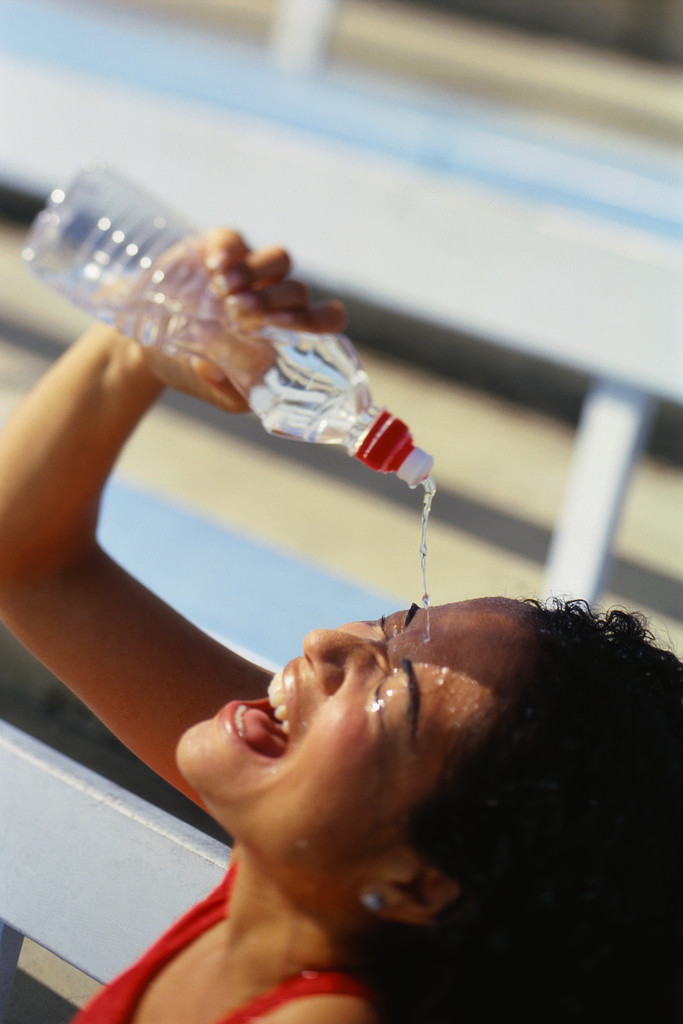
Drink up!

We all know how important it is to remain hydrated during sport and exercise so as to maintain our performance level. Your body needs to replace fluids, sodium, potassium, chloride and other elements lost during exertion. And while it is important to consume liquids there may be a couple of little known facts that you might be interested to add to your knowledge bank.
  • Did you know that emerging data shows that simply washing the mouth with water or sports drink can effectively delay fatigue? So while consuming the necessary fluids is important, rinsing your mouth can be beneficial as well. (article 3)

  • The same article suggests that people who drank fluids from freely flowing sources such as a cup or open mouth bottle consume more than those who drink from a straw? Something to think about next time you use that squeeze bottle, perhaps taking the nozzle out might be more beneficial. (article 3)

  • You may not feel like your sweating as much during cold weather workouts, but you are still losing fluids while exercising in the winter. You may not need the same amount of electrolyte replacement as during the summer, but it is important to keep up fluid levels as cold-weather dehydration can increase the risk of hypothermia. (article 4)

So whether you are a recreational or high performance athlete, and it’s summer or winter it is important to check and maintain a good fluid balance to stay at your best performance level. Checkout these and other hydration-related resources at the SIRC library:

  1. Hydration science-From Hype to Hyponatremia Scan’s Pulse, Summer 2009, 28(3) p.17
  2. Gregory Seale. Water and the Energy Drink. SPED: Sport and Physical Education. May 2009, 6(1) p.8-9.
  3. Kirkendall, Donald. Hydration: It’s Just the First Step. Soccer Journal, September-October 2009, 54(5) p. 20.
  4. Carmichael, Chris. Drinking Problem. Outside. December 2006, 31(12) p. 80.

Wednesday, August 6, 2014

SIRC Newsletter -Drink Up!

Check out the latest SIRC Newsletter -Drink Up!

Did you know that chocolate milk provides excellent muscle recovery, or cherry juice helps with aches and pains, or that excessive cola consumption can lead to problems with your muscles? We have heard how important it is to stay hydrated when exercising, but there is more to it than fluid intake. Of equal importance is what you drink and when you drink it. Different beverages have been proven to aid in recovery, help with cramps, boost energy and keep you hydrated. But if you drink them at the wrong time during your workout, you may actually be hurting your performance.

Monday, July 7, 2014

Ch-Ch-Ch Chia ~ It's Not The Pet It Use To Be!

How to fuel the body is as diverse as the body itself, but it also depends on the nature of the activities being done. “Filling the tank” while engaging in sport or physical activity of any kind involves eating a healthy well–balanced diet, if there is to be a return on investment. Energy drinks, gels and bars provide quick and convenient energy and still gaining popularity as an energy source is the super food - the Chia seed.

What is old is new again. Known as the “Indian Running Food”, the Chia seed is an ancient seed that has been used by tribesman as a source of energy and sustenance for many, many years. Amongst its advantages are that it is lightweight, easily digestible, and is packed with fiber while also offering a complete essential amino-acid package. Even eating Chia on a regular basis will decrease food cravings and assist with weight loss as well. When Chia seeds are mixed with other foods, it displaces calories and fat without diluting any of the flavours. And when it’s made into the Chia gel (by mixing it with water), it displaces rather than dilutes, creates more surface area, and can enhance the flavour rather than dilute it.


Companies such as “Holy Crap”, based in Canada, have developed a ‘breakfast’ mix, while other companies offer up a multitude of recipes where Chia can be successfully added. Best known for its highly successful Chia pet marketing campaign, now there are many ways to actually include Chia into the daily diet, whether you are an elite athlete, moderately physically active, or aiming for some weight loss.


Contact SIRC for more information on super foods or other nutrition topics!

Sunday, July 6, 2014

“Water, water, everywhere, Nor any drop to drink.”

There is no doubt that water is essential for life considering that 60-70% of our bodies is made up of water. Consuming just the right amount of water is paramount in not only regulating body temperature, but building new cells, eliminating waste and playing its’ part in producing energy.

But can you ever have too much of it? The simple answer is yes, especially if you are working out or competing in endurance type events. Over-drinking especially during exercise can lead to hyponatremia, a condition in which the sodium concentration in the blood drops because there is too much water in the bloodstream and an inadequate excretion of water in urine. Basically, the sodium in the body gets diluted. (Hypo means too small; natremia means sodium status.)

A lot of distance and endurance events, including triathlons, ultra-distance and marathons, are almost always concerned with dehydration of their participants, and therefore have water stations located at various distances throughout the course. Research shows that unless you are sweating profusely, and feeling moderately thirsty, that the athlete should actually bypass some stations and not get caught up in over hydrating as this can lead to hyponatremia. Unfortunately, it is the inexperienced and novice that tend to overdo the fluid intake and are most at risk.

Some of the symptoms of hyponatremia can include:
  • Fatigue
  • Feeling of fullness
  • Unable to urinate
  • Confusion and lethargy
  • Dizziness
  • Muscle weakness, spasms or cramps
  • Seizures
  • Coma and death (in extreme cases)
Hard to believe, but even water can be considered a poisonous substance when over-consumed, just like any substance that can throw the water-sodium balance off-kilter. Finding the water balance for each participant is key and also requires practice.

For more information on hydration for endurance events, please contact SIRC.

Thursday, July 3, 2014

Calories Galore!

Nowhere is the necessity of an efficient fuel energy system in an endurance sport more evident than with the cyclists in the Tour de France who ride up to 180km per stage for 21 stages (with only one day of rest) often through some of the most challenging terrains in the world. The Pyrenees, the Alps – mountain roads just don’t get any tougher or higher. At rest, the caloric energy required for a 75kg man to sustain life is somewhere in the neighbourhood of 1500-2000 calories. Taking into consideration that cycling is a highly efficient sporting activity with respect to moving a body, Tour cyclists use up 25-30 calories per km (0.3-0.4 calories per km per kg of body mass) – this translates to an average of over 4000 calories per day at a minimum. That’s a total of more than 5500 calories of energy input per day just to physically survive a stage in the Tour (some cyclists have been known to eat as many as 9000 calories per day!)


To prevent hypoglycemia (low glycogen) otherwise known as the dreaded “bonk”, Tour rules do permit cyclists to eat from food bags during the race, otherwise there just would not be enough waking hours in the day for the cyclists to consume all these calories. Since eating cheeseburgers or chocolate bars all day is not practical, the science of feeding a Tour cyclist is mandatory. Breakfast, three to four hours prior to the starting time, will include highly digestible carbohydrates such as cereal, rice and pasta. A few hours before a stage start, cyclists will consume a slow-release carbohydrate liquid mix bringing their pre-race caloric count to 1000. While burning up to 900 calories an hour, they can only still process approximately 300 calories per hour. Throughout the ride cyclists must stay hydrated and will also consume a few boxes of fast energy bars and gels, while Panini’s are popular for lunch while still on the bike as they provide sustenance. Post race recovery drinks and containers of white rice and egg dishes provide proteins necessary to quicken muscle repair, followed by a balanced dinner binge that not only aids in full muscle glycogen recovery but starts loading for the energy system for the next day.

For more information on fueling to feed the endurance athlete, please visit SIRC.

Tuesday, June 24, 2014

Winter Cycling


by Michelle Caron
Algonquin College Library Technician Student
SIRC Intern

Peering outside in the morning darkness when it’s cold and windy outside is enough to discourage even the most determined cyclists.  However, making the appropriate adjustments for the climate in the winter months can make cycling in the winter months both positive and enjoyable.

Be Prepared:
Most people who ride in the winter get the question “how do you stay warm?” But the issue is not how to stay warm, it’s how do you regulate your temperature once the body starts working hard? 

The key to this challenge is layering:
  • The first layer should be snug to your body and made of a material that moves moisture away from you, synthetics or wool are your best options.
  • The second layer is an insulator and should be a little looser on your body to trap the air and keep you warm. 
  • The third layer is to protect you from the elements.  It should be a zip-up with wind-blocking and water resistant capabilities.  Be prepared to dress up or dress down.
  • The most important to consider are the hands, feet and head since these can get cold the quickest.  Some items to check out would be lycra booties, polyester socks, wind stopper gloves and wool hats with ear guards.
Wear bright clothing, winter consists of shorter daylight hours and flying snow can make it difficult for others on the road to spot you.  Attaching lights to your bike are a good idea and can keep you safer. Every year there are new items of cycling gear on the market and a consumer should have no problem finding what they need to get started.

Road chemicals, salt, and sand can all deteriorate your bike quickly.  If you take 10-15 minutes to wipe down and lubricate your bike after each ride it can prevent corrosion and save you some money on repairs in the future.  Equipping your bike with studded tires helps with traction and increases control. 

Since it is cold outside, riders tend to forget to stay hydrated.  The reality is that biking is an aerobic activity, and with the added layers can actually make you feel warmer.   If temperatures are really cold, you can keep your water bottle next to your body to prevent the water from freezing.

For more tips on winter cycling safety, comfort and maintenance visit SIRC.

References from the SIRC Collection: 
  1. "Beat The Big Freeze." Cycling Weekly(2010): 38-41.
  2. Bridge, M., and M. Febbraio. "Training In Extreme Conditions." In Jeukendrup, A.E. (ed.), High-performance cycling, Champaign, Ill., Human Kinetics, c2002, p.43-55. United States: 2002.
  3. Michael N. Sawka, et al. "Glycerol Hyperhydration: Physiological Responses During Cold-Air Exposure." Journal Of Applied Physiology 99.2 (2005): 515-521.
  4. "Pulling Out The Winter Gear As The Temperature Drops." Cycling Weekly (2009): 33.


Monday, June 16, 2014

Hit the Start Line Prepared!

You’ve been preparing for your big competition and it’s finally here. Managing stress when you are about to compete is always a challenge when you’ve put so much effort in the hopes of being successful. Pre-event planning is not something to be overlooked and can be essential to your achieving your goal. Knowing that everything is in order and accounted for can help to ease your mind and help you focus on beating your competitors.

Create a checklist!
Poor planning generally means that there will be mad rush on the morning of the competition searching for items you’ve misplaced or essential papers you need. Having a checklist can help you organize yourself and is something to refer to when things really start moving. Incorporate a checklist as part of your routine as having a routine can be relaxing in itself.

Book ahead of time!
Depending on the size of your event, it is prudent to book any travel or accommodations you might need for that day well in advance. A few days before the competition, call or email to confirm the reservation to ensure nothing has been missed. There are many things you can do before an event to help you prepare, like packing early, looking at the timetable and knowing where you are to be and when.

Stick to your routine!
A competition day should not be the day to try new things, stick to your routine and only eat or drink items that your body is already used to. Trying something new should be done in advance to determine what works and what doesn’t. Usually it’s the little things that can cause stress, so make sure you’re covered. Have your food ready, if not packed, the night before, check the weather, travel conditions, etc.

Take care of yourself!
Stay hydrated and go to bed early for a good night sleep. Nerves can keep you up, but knowing you have trained, planned ahead and that all the extra detail work is already done should help you unwind enough to get to sleep.

Perform your best!
After a final re-check of the day, you can relax and get ready to set a personal best!

References from the SIRC Collection
  1. Barber, L. K., Munz, D. C., Bagsby, P. G., & Powell, E. D. (2010). Sleep consistency and sufficiency: are both necessary for less psychological strain?. Stress & Health: Journal Of The International Society For The Investigation Of Stress, 26(3), 186-193. 
  2. Clement, D., & Gilson, T. (2012). Helping Athletic Training Students Deal With Stress. International Journal Of Athletic Therapy & Training, 17(1), 20-23. 
  3. McCann, Sean (2009). Routines, Rituals and Performing Under Stress. Soccer journal 54(1), 40;42. 
  4. Spano, J. L. (2008). Impact of Life Stressors on Athletes. Athletic Therapy Today, 13(2), 42-43.

Sunday, June 15, 2014

Running a Marathon? Keep Yourself Hydrated

It’s race weekend in Ottawa! Which means people of all ages and fitness levels will be hitting the road running and walking.  With the weekend looking like it's going to be a warm one, we all have to remember to take good care of our bodies, most importantly staying hydrated.

First of all, sweat contains electrolytes and the main electrolyte lost in sweat is sodium, although how much each individual loses through sweat varies from person to person. Electrolytes are ionic solutions (salts) that exist in the form of minerals.  They play a variety of important roles in the body and are mainly comprised of:
  • Calcium – which is essential for bone formation, aids in muscle contraction, blood clotting and the transmission of nerve impulses 
  • Magnesium - helps the body use glucose, assists in making protein and fat, and acts as a method for energy production 
  • Sodium – has the important function of helping to balance fluid levels in the body 
During prolonged workouts, especially in humid or hot conditions, sweating increases and electrolytes are lost, therefore making it harder to maintain fluid balance and can lead to dehydration.

Drinking only when thirsty will prevent over-consumption of fluids and is the safest way to hydrate during endurance exercise. Many runners believe that they need to “hyper-load” on fluids before race day. In reality, the body is not equipped to carry excess fluid and drinking too much during exercise can dilute the sodium content of blood to abnormally low levels which can cause hyponatremia.

Hyponatremia is an imbalance of water to salt in the body and can cause:
  • Confusion
  • Fatigue 
  • Muscle Spasms 
  • Vomiting 
The best course of action is not to blow by those first water stations when running a marathon, take the time to grab that paper cup and keep yourself consistently hydrated. This way you won’t dehydrate at the end of your run and lose out on performance.

So, all of you that will be running this weekend, have fun and keep drinking water!

References from the SIRC Collection

1. Anastasiou C, Kavouras S, Sidossis L, et al. Sodium Replacement and Plasma Sodium Drop During Exercise in the Heat When Fluid Intake Matches Fluid Loss. Journal Of Athletic Training [serial online].
2. Beltrami F, Hew-Butler T, Noakes T. Drinking policies and exercise-associated hyponatraemia: is anyone still promoting overdrinking?. British Journal Of Sports Medicine [serial online].
3. Clark N. Fluid Facts for Active Lifestyles. Palaestra[serial online]. Summer2007 2007;23(3):43-44.
4. Gibala M. DIET FOR SPORT PERFORMANCE & ACTIVE LIFESTYLE. Wellness Options [serial online]. 2005;(21):32-33.
5. Heaner M. To Salt or Not to Salt?: An update on sodium and how it affects health and exercise. IDEA Fitness Journal [serial online].
6. Webster S. do runners overhydrate on race day?. IDEA Fitness Journal [serial online]. November 2011;8(10):57.