Showing posts with label hyponatremia. Show all posts

Sunday, July 6, 2014

“Water, water, everywhere, Nor any drop to drink.”

There is no doubt that water is essential for life considering that 60-70% of our bodies is made up of water. Consuming just the right amount of water is paramount in not only regulating body temperature, but building new cells, eliminating waste and playing its’ part in producing energy.

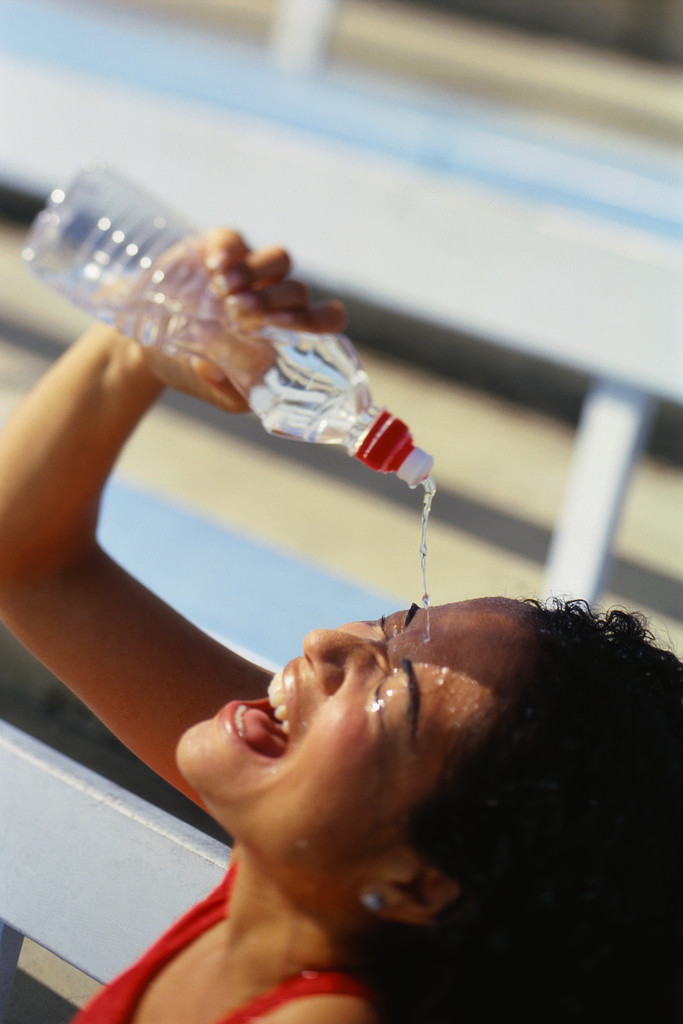
But can you ever have too much of it? The simple answer is yes, especially if you are working out or competing in endurance type events. Over-drinking especially during exercise can lead to hyponatremia, a condition in which the sodium concentration in the blood drops because there is too much water in the bloodstream and an inadequate excretion of water in urine. Basically, the sodium in the body gets diluted. (Hypo means too small; natremia means sodium status.)

A lot of distance and endurance events, including triathlons, ultra-distance and marathons, are almost always concerned with dehydration of their participants, and therefore have water stations located at various distances throughout the course. Research shows that unless you are sweating profusely, and feeling moderately thirsty, that the athlete should actually bypass some stations and not get caught up in over hydrating as this can lead to hyponatremia. Unfortunately, it is the inexperienced and novice that tend to overdo the fluid intake and are most at risk.

Some of the symptoms of hyponatremia can include:
  • Fatigue
  • Feeling of fullness
  • Unable to urinate
  • Confusion and lethargy
  • Dizziness
  • Muscle weakness, spasms or cramps
  • Seizures
  • Coma and death (in extreme cases)
Hard to believe, but even water can be considered a poisonous substance when over-consumed, just like any substance that can throw the water-sodium balance off-kilter. Finding the water balance for each participant is key and also requires practice.

For more information on hydration for endurance events, please contact SIRC.

Sunday, June 15, 2014

Running a Marathon? Keep Yourself Hydrated

It’s race weekend in Ottawa! Which means people of all ages and fitness levels will be hitting the road running and walking.  With the weekend looking like it's going to be a warm one, we all have to remember to take good care of our bodies, most importantly staying hydrated.

First of all, sweat contains electrolytes and the main electrolyte lost in sweat is sodium, although how much each individual loses through sweat varies from person to person. Electrolytes are ionic solutions (salts) that exist in the form of minerals.  They play a variety of important roles in the body and are mainly comprised of:
  • Calcium – which is essential for bone formation, aids in muscle contraction, blood clotting and the transmission of nerve impulses 
  • Magnesium - helps the body use glucose, assists in making protein and fat, and acts as a method for energy production 
  • Sodium – has the important function of helping to balance fluid levels in the body 
During prolonged workouts, especially in humid or hot conditions, sweating increases and electrolytes are lost, therefore making it harder to maintain fluid balance and can lead to dehydration.

Drinking only when thirsty will prevent over-consumption of fluids and is the safest way to hydrate during endurance exercise. Many runners believe that they need to “hyper-load” on fluids before race day. In reality, the body is not equipped to carry excess fluid and drinking too much during exercise can dilute the sodium content of blood to abnormally low levels which can cause hyponatremia.

Hyponatremia is an imbalance of water to salt in the body and can cause:
  • Confusion
  • Fatigue 
  • Muscle Spasms 
  • Vomiting 
The best course of action is not to blow by those first water stations when running a marathon, take the time to grab that paper cup and keep yourself consistently hydrated. This way you won’t dehydrate at the end of your run and lose out on performance.

So, all of you that will be running this weekend, have fun and keep drinking water!

References from the SIRC Collection

1. Anastasiou C, Kavouras S, Sidossis L, et al. Sodium Replacement and Plasma Sodium Drop During Exercise in the Heat When Fluid Intake Matches Fluid Loss. Journal Of Athletic Training [serial online].
2. Beltrami F, Hew-Butler T, Noakes T. Drinking policies and exercise-associated hyponatraemia: is anyone still promoting overdrinking?. British Journal Of Sports Medicine [serial online].
3. Clark N. Fluid Facts for Active Lifestyles. Palaestra[serial online]. Summer2007 2007;23(3):43-44.
4. Gibala M. DIET FOR SPORT PERFORMANCE & ACTIVE LIFESTYLE. Wellness Options [serial online]. 2005;(21):32-33.
5. Heaner M. To Salt or Not to Salt?: An update on sodium and how it affects health and exercise. IDEA Fitness Journal [serial online].
6. Webster S. do runners overhydrate on race day?. IDEA Fitness Journal [serial online]. November 2011;8(10):57.