Showing posts with label seniors. Show all posts

Friday, June 20, 2014

Forever Young


As we all get older, age starts to take a toll on our bodies. For most of us this is a pessimistic outlook that we do not want, therefore we need to take action. Quality of life is just as important as quantity, training is necessary for health and longevity.

Exercise suggestions:
  • When going to the gym, a workout should not be focused on a specific area of the body. Most people that work out solely their arms or legs are not trying to improve the muscle’s function but rather how they look. It is okay to train for aesthetics, however as we age our bodies naturally lose strength and size (sarcopenia).  Therefore it is important to keep the whole body in mind, functioning as a well oiled machine.
  • The most important thing to remember is not to train the muscle but rather to train the movement. Some ideal exercises include squats, over head presses and dead lifts. These may sound like hardcore power lifts, however it is not about how much weight is used but rather applying the proper technique.
  • The average human spends 9 hours sitting a day. Overtime, this will take a toll on an individual’s posture. In order to help with hyperkyphosisor a rounded upper back, rowing type movements will strengthen the core. Having poor posture can also make you appear much older.
  • As we age, along with poor posture, our muscles and joints tend to stiffen, reducing flexibility. The condition associated with muscle becoming worn is called osteoarthritis. This can affect our balance and ability to move smoothly. Contrary to popular belief, strength training and weight bearing exercise decreases, not increases, joint pain. Studies show that people suffering from arthritishave reduced knee pains after performing squats regularly.
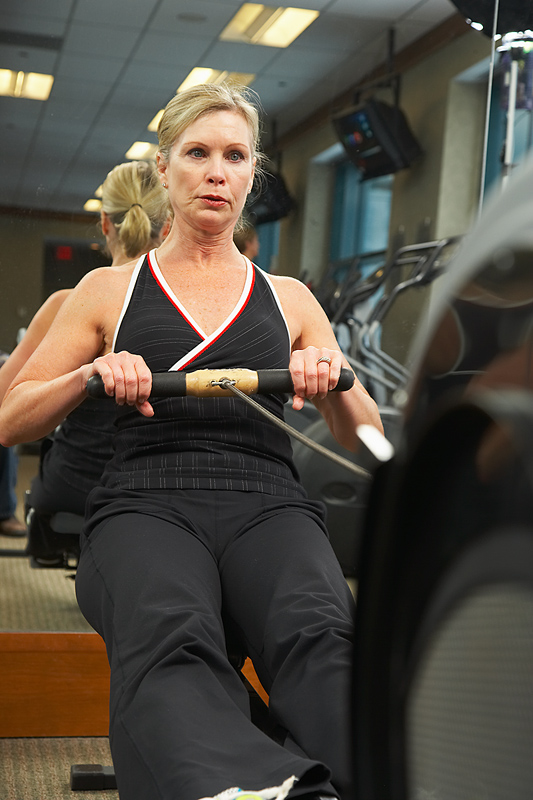
Before walking through those gym doors it is important to set a workout plan that considers your medical needs. Personal trainers may come at a cost but they are highly qualified and can be very beneficial.     

Source from the SIRC Collection:
Dale, P. (2011) Anti-Aging Strategies. Ultra- fit. 21(6), 112- 113.

Friday, June 6, 2014

Does exercise help osteoarthritis?

Osteoarthritis or "common arthritis" is the gradual wearing down of the joint's hyaline cartilage. Our joint's have a shiny, smooth surface at the end of each bone which allows friction and free motion. When this area becomes damaged, thinned or worn away it is known as osteoarthritis. The rubbing of the damaged area is painful and the repetition leads to inflammation, swelling and more pain.

Three kinds of exercises you can do if you have osteoarthritis:
Exercise is considered the most effective non-drug treatment for reducing pain and improving movement for people with osteoarthritis.  Keep in mind that exercise should be balanced with rest and joint care. If your joints hurt or you have redness or swelling, rest your joints and then try again.  Other treatments include physiotherapy, podiatry, anti-inflammatories and supplements such as Glucosamine and Chondroitin.  These supplements are not heavily researched, however they are still widely prescribed to help people with osteoarthritis.

You may not be able to perform like you did when your were in your twenties, but the smart person who continues to exercise is one who adapts their training and works with their body, not against it.  As always, before starting any training regimen, speak to your doctor first and then decide which exercises may be best for you.  Many people have made changes to their lifestyle after being diagnosed with osteoarthritis and continue to enjoy daily exercise.

References from the SIRC Collection: 

1. Better adherence to exercise means better relief from osteoarthritis pain. Research Review (International Council On Active Aging). July 28, 2010;10(27):2-3.
2. Christensen K. Ease the Pain of Arthritis With Exercise. American Fitness. July 2009;27(4):12-13. 
Exercises in Warm Water Can Help Relieve Osteoarthritis Pain. PT: Magazine Of Physical Therapy. January 2008;16(1):66-68.
3. Focht B. How Knee Osteoarthritis Patients Can Use Exercise to Enhance Quality of Life. ACSM's Health & Fitness Journal. September 2012;16(5):24-28.
4. Page P. Knee osteoarthritis: strength training for pain relief and functional improvement. Functional U. September 2003;1(6):1-6.
5. People with osteoarthritis feel better with exercise and the right shoes. Research Review (International Council On Active Aging). March 24, 2010;10(12):2-3.

Tuesday, May 13, 2014

Adventure Travel and the Older Adult

With summer in full swing, many older adults will be boarding planes, trains and ships to head off for their latest travel adventure. Research shows that the aging population, with their improved health and disposable incomes are looking for trips that are stimulating culturally, socially and that include a lot of interaction and adventure. Many individuals or couples are increasing their level of physical activity in retirement and are seeking trips that will give them a challenge.

Before choosing a trip or adventure, it is a good idea to take a look at the types of activities you will be doing and match them to your skill and fitness level. For example:
  1. Easy adventures - involve bus/cross-border shopping trips or cruises
  2. Moderate adventures - may include hiking or geocaching
  3. Extreme or 'hard' adventures - white water rafting, ziplining, or trekking through the jungle
Every trip involves a little preparation, especially if you plan on pursuing an adventure that will push your limits. Many activities will involve walking, climbing stairs or standing for long periods of time. A good fitness program will include exercises that work the cardiovascular system, increase flexibility, and improve strength and balance.
  • Set aside a predetermined time to walk, bike, swim, or participate in an exercise class.
  • Investing in a pedometer can provide good motivation and feedback on your progress.
  • Incorporate physical activity in your life by; taking the stairs, parking further away from a mall entrance, or pacing while talking on the phone.  All of these little changes will add up to a substantial increase in your physical activity.
  • Flexibility training will come in handy for long days of sight seeing.  Stretching is also important for those who will be doing a lot of walking during their travels, experiencing long plane rides or driving for long distances.
People often think of vacations as a time to do less, when in fact many people end up doing more physical activity while away from home. If you want to make the most of your travels, develop a good level of fitness before you take off on your next adventure!

References from the SIRC Collection:

1. Cruising comforts. Active Living. November 2002;11(5):38-39.
2. Luthi W. Adventure travel: an overview. Journal On Active Aging. May 2007;6(3):38-46.
3. Patterson I. Baby Boomers and adventure tourism: the importance of marketing the leisure experience. World Leisure Journal. 2002;44(2):4-10.
4. Rogers M, Rogers N, Page P. Get ready for summer! a fitness program to prepare for vacations. Functional U. May 2007;5(3):1-8.
5. Staats S, Pierfelice L. Travel: A Long-Range Goal of Retired Women. Journal Of Psychology. September 2003;137(5):483-494. 
6. Sugerman D. The relationship of age to motivation and skill development level in outdoor adventure programs for older adults. / Comment l'age agit sur la motivation et le niveau de developpement des habiletes dans les programmes d'activites de plein air axees sur l'aventure, a l'intention des aines. / Como la edad actua sobre la motivacion y el nivel de desarrollo de las habilidades en los programas de actividades al aire libre orientados sobre la aventura y dirigidos hacia las personas mayores. Society & Leisure / Loisir & Société. Autumn 2002 2002;25(2):351-376.
7. Travel by Leisure Care: enriching lives through the fun of adventure. Journal On Active Aging. May 2007;6(3):76-79.